Most Perth homeowners assume their garage doors are fine just because they open and close. But are they truly safe? Understanding garage door safety standards Australia is critical to protecting your family and avoiding accidents. With updates in recent years, many older doors lack essential features that ensure safety for children and adults alike.
Between July 2020 and June 2021 alone, over 3,000 Australians were hospitalised due to garage-related injuries. The most common incidents? Children crushing fingers in doors or being trapped by automatic garage doors.
This guide covers everything Perth homeowners need to know about garage door safety compliance in 2026, from understanding Australian standards to protecting your family and avoiding insurance complications.
Understanding Garage Door Safety Standards Australia
Two key standards govern garage door safety in Australia:
AS/NZS 4505:2012 covers the physical aspects of garage doors, dimensions, clearance requirements, and structural integrity. This ensures your door won’t fail under normal use or during Perth’s occasional strong winds and storms.
AS/NZS 60335.2.95:2024: This addresses standard for automatic openers. It mandates that any smart-controlled opener must include monitored safety infrared beams to allow for “unattended operation.” These beams aren’t just an accessory; they are a mandatory safety requirement under the current code.
The National Construction Code incorporates these standards into the Building Code of Australia. If your garage shares a wall with a habitable room, you may also face additional requirements for fire-rated or self-closing doors.
What Changed and When
Doors installed before 2012 often lack features now considered essential for safety. While grandfathering provisions may apply to existing installations, when you replace or modify your system, new installations must meet current standards.
Section 37 of the WA Building Act 2011 is clear: builders and installers must ensure compliance with applicable standards. Working with licensed professionals protects you from future complications.
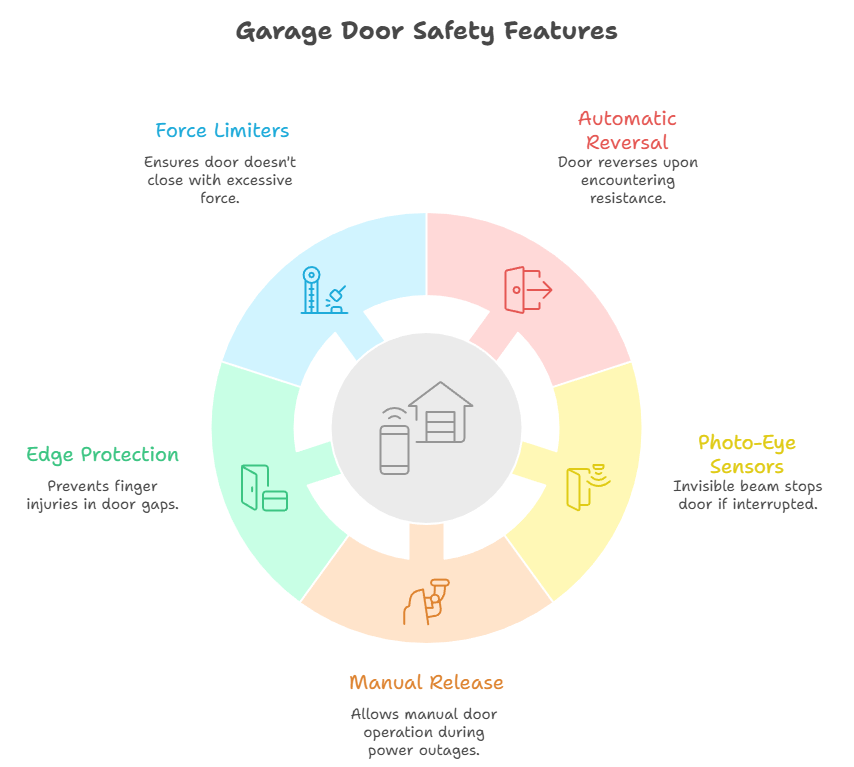
1. Automatic Reversal System
The most fundamental safety feature, your door should immediately reverse when it encounters resistance while closing.
Test it: Place a brick in the door’s path. When closing, the door should reverse immediately upon contact. If it doesn’t, you’ve got a safety issue requiring professional attention.
2. Photo-Eye Safety Sensors
These infrared sensors (usually mounted 10-15cm above ground) create an invisible beam across your doorway. If anything interrupts the beam while closing, the door stops and reverses.
As updated in the latest 2024 standard, smart-controlled openers must include monitored safety infrared beams, the system continuously checks they’re functioning and aligned.
Test it: Wave your hand through the sensor beam while the door closes. It should stop and reverse immediately.
Perth consideration: Coastal salt air can cause sensor misalignment or corrosion, particularly in beachside suburbs like Cottesloe or Scarborough. Check alignment and cleanliness every few months.
3. Manual Release Mechanism
When power goes out or your opener fails, you need to open the door manually. The manual release (usually a red handle on a cord) disconnects the door from the automatic opener.
Current standards require this to be easily accessible and clearly marked. You should be able to open your door manually in under 10 seconds.
Test it: Pull the release handle and lift the door by hand. A properly balanced door should stay in place when lifted halfway and released.
4. Edge Protection and Finger Guards
Gaps between sectional door panels are wide enough for small fingers and when the door moves, those fingers can be crushed. This is one of the most common garage door injuries in young children.
Modern sectional doors should include finger protection systems. Older doors probably don’t have them, though some can be retrofitted with finger guard kits.
5. Force Limiters
Your door shouldn’t close with enough force to cause serious injury. Expert technicians test this using specialised force gauges, not something you can measure at home, which is why professional inspections matter.
Child Safety: Beyond Basic Compliance
A garage door weighs 100-200kg. When that weight is in motion, functioning safety systems become critical. According to Kidsafe Australia, injuries in garages most commonly involve children crushing fingers in doors or being trapped by garage doors or electric gates.
Additional measures worth considering:
- Mount wall controls at least 150cm high – out of children’s reach
- Store portable remotes like you would car keys
- Install motion-activated lighting around the door area
- Teach children why they must stay clear of moving doors
Simple parent test: Place your child’s toy in the door’s path. Does it reverse immediately? This demonstrates both the safety system working and provides a teaching moment.
Insurance and Legal Liability
Most Australian home insurance policies cover garage doors for damage from storms, vandalism, and fires. What they don’t cover is wear and tear, and this matters for safety compliance.
If a garage door causes injury and investigations reveal non-compliant systems or poor maintenance, your coverage could be affected. Proper installation using approved systems and certified installers ensures your door performs safely and remains covered by insurance.
The data is clear: Proper maintenance prevents approximately 73% of garage door warranty claims.
Questions for Your Insurer
- Does your policy require specific Australian safety standards compliance?
- Is damage from malfunctioning garage doors covered, or does it require additional coverage?
- How does liability coverage apply if the door injures someone?
- Are there documentation requirements around professional installation or servicing?
Rental Property Obligations
Landlords have a duty of care ensuring properties are safe, including garage doors. When injuries occur on rental properties, liability examinations will assess whether the door met standards and whether maintenance obligations were met.
Under WA tenancy law, landlords must maintain properties in reasonable repair. For garage doors, this means ensuring safety systems function, addressing reported issues promptly, and conducting regular inspections.
Garage Door Safety Standards Australia: How to Get Certified
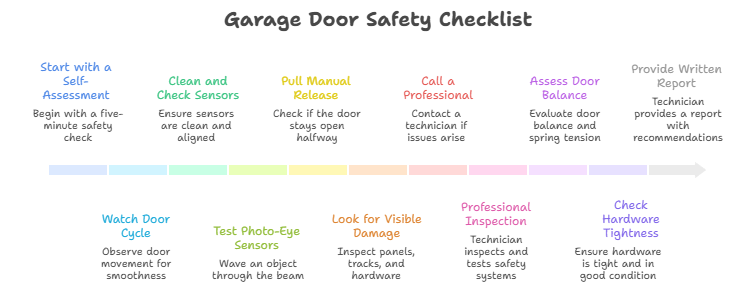
Start with a Self-Assessment
The five-minute safety check:
- Watch your door complete a full cycle, does it move smoothly or jerk and hesitate?
- Clean and check sensor alignment
- Test photo-eye sensors by waving an object through the beam
- Pull the manual release and lift the door, does it stay open halfway?
- Look for visible damage to panels, tracks, or hardware
When to Call a Professional
Call immediately if:
- The door doesn’t reverse when meeting resistance
- Sensors don’t stop the door
- Manual operation is difficult or the door won’t stay open
- You hear grinding or unusual noises
- Your door was installed before 2012 and hasn’t been assessed
Even without obvious problems, annual professional inspections are recommended. Force measurements and spring tension can’t be accurately assessed without proper equipment.
What Inspections Include
Qualified technicians will:
- Visually inspect all components
- Test all safety systems using proper equipment
- Assess door balance and spring tension
- Check hardware tightness and condition
- Provide a written report with repair recommendations
Cost Considerations
| Item | Typical Cost Range (Perth) |
| Standard safety inspection | $100 – $200 |
| Photo-eye sensor upgrades | $150 – $350 |
| Force limiter adjustments | $200 – $500 |
| Full safety retrofit | $500 – $1,200 |
While costs vary by door type and condition, they are modest compared to the risks of unsafe operation. Serious garage door injuries can result in medical and liability costs reaching tens of thousands of dollars.
Perth-Specific Considerations
Coastal Properties
Salt air accelerates wear on springs, tracks, and sensors. For coastal properties, six-monthly inspections aren’t excessive, they’re necessary.
Choose corrosion-resistant materials when replacing components. Regular fresh-water hosing after windy conditions removes salt deposits before corrosion occurs.
Smart Garage Door Systems
Smart openers installed after November 2020 must include monitored safety beams, specifically because remote operation means you can’t see if something’s in the door’s path.
Ensure your smart system uses secure authentication, change default passwords, and keep firmware updated.
Frequently Asked Questions
Q1. How often should garage doors be inspected in Perth?
A: Most homes benefit from annual inspections. Coastal properties, heavy-use doors, and doors installed before 2012 may need checks every six months.
Q2. Do older garage doors need to meet current standards?
A: Existing compliant doors aren’t required to be retrofitted, but new components or major modifications must meet current standards. Upgrading safety features is strongly recommended.
Q3. Does an inspection include repairs?
A: No. Inspections identify issues only. Any repairs are explained and quoted separately.
Q4. Can I install a garage door myself?
A: Professional installation ensures safety compliance, correct calibration, and insurance validity. DIY work on high-tension components like springs is dangerous.
Q5. Will safety upgrades reduce insurance premiums?
A: This depends on your insurer. The main benefit is ensuring your policy responds correctly if an incident occurs.
Conclusion: Take Action Now
Garage door safety isn’t about ticking regulatory boxes, it’s about ensuring the 150kg door cycling through your garage won’t seriously injure someone you care about.
Your next steps:
- If you haven’t had professional inspection in the past year, schedule one
- If you have young children and your door predates 2012, prioritise a safety assessment
- If you’re a landlord, verify your garage doors meet current standards
- If you’re in coastal Perth, implement six-monthly inspection schedules
Taking action now, when there’s no crisis, it gives you time to make informed decisions rather than frantically responding to an emergency. Following the <strong data-start=”1582″ data-end=”1624″>garage door safety standards in Australia</strong&amp;amp;gt; ensures your door is safe and compliant.
About the Author
I’m Antonio, the owner of Statewest Garage Doors. With hands-on experience installing and repairing thousands of doors across Perth, I wrote this guide because I see firsthand how often safety is overlooked. My goal is to use my technical experience to help Perth homeowners keep their doors compliant, their insurance valid, and, most importantly – their families safe.
For advice or a safety check, you can reach our team at 0415 979 037.